
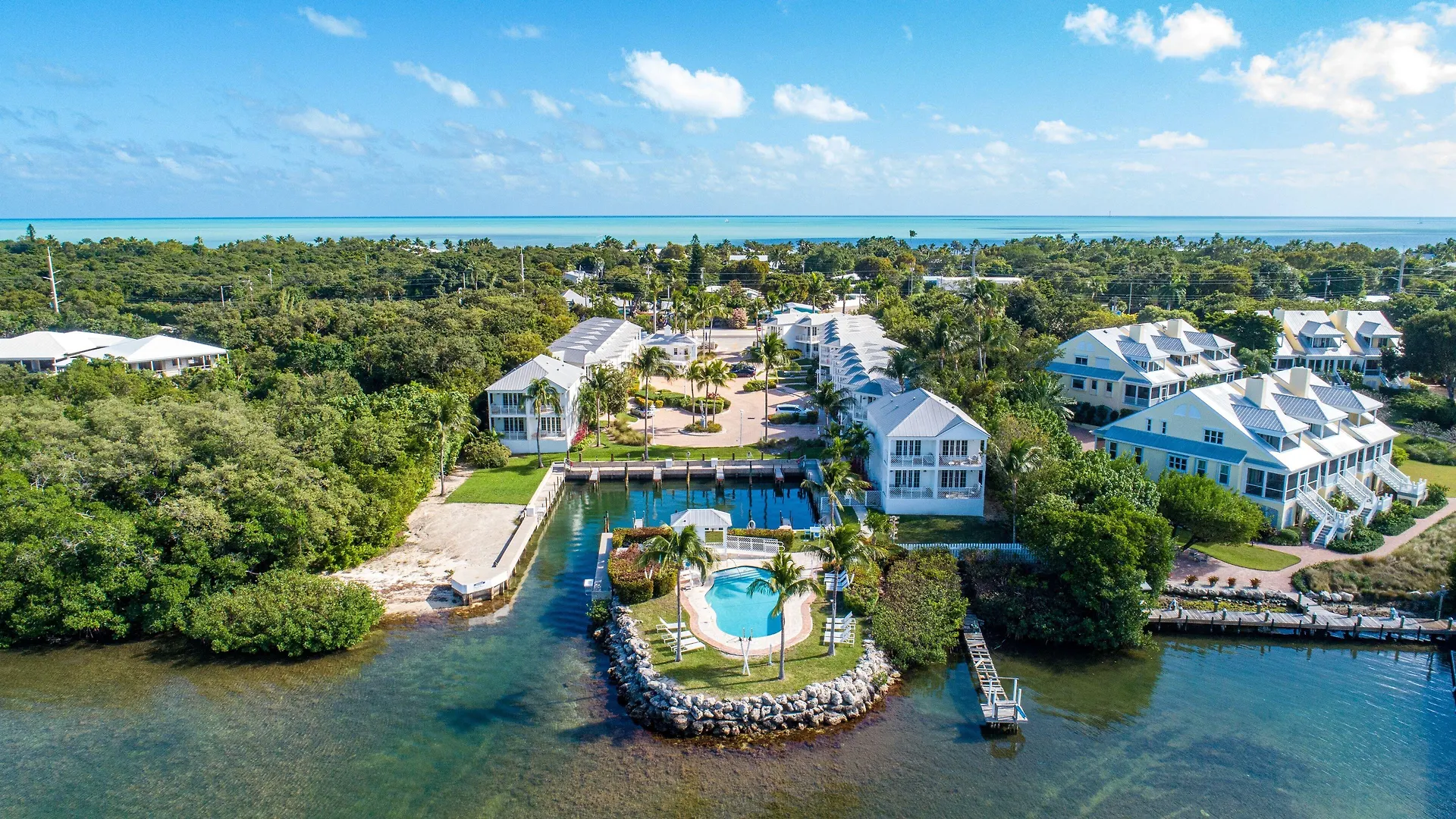
Islamorada sits in the middle of the Florida Keys, stretched across six coral islands between the Atlantic Ocean and Florida Bay. Known as the Sport Fishing Capital of the World, it draws anglers, divers, and water sports enthusiasts who want direct ocean access - not just a pool view. These six beach hotels put you on the water from day one, with options ranging from self-catered townhouse villas to full-service luxury resorts with private fishing piers.
What It's Like Staying In Islamorada
Islamorada is not a walkable destination in the traditional urban sense - it is a car-dependent island chain where US-1 (the Overseas Highway) is the single road connecting everything. Most beach hotels sit directly on the water with their own amenities, meaning guests rarely need to leave the property for the basics. The pace here is deliberately slow, shaped by tidal schedules, fishing trips at dawn, and sunsets watched from docks rather than rooftop bars.
Crowd patterns follow a clear seasonal logic: winter months bring snowbirds from the Northeast and Midwest, while summer attracts Florida families on school breaks. Outside of those windows, the island feels remarkably quiet for a Keys destination that sits only around 90 minutes from Miami.
Pros:
- Direct Atlantic or Florida Bay access from nearly every beach hotel on the island
- Far less crowded and commercialized than Key West while offering similar water activities
- Strong infrastructure for fishing, kayaking, snorkeling, and diving without leaving the Islamorada area
Cons:
- A car is essential - there is no public transit and distances between restaurants or attractions require driving
- Dining options thin out quickly outside of a few well-known spots along US-1
- Peak season prices can be significantly higher, and availability at oceanfront properties books up weeks in advance
Why Choose Beach Hotels In Islamorada
Beach hotels in Islamorada are not interchangeable with standard Florida coastal properties - most sit directly on either the Atlantic or Florida Bay side of the islands, offering fundamentally different water experiences. The bay side delivers calmer, shallower water ideal for kayaking and paddleboarding, while the ocean side gives you reef snorkeling access and deeper fishing waters within a short boat ride. Room sizes at these resorts tend to be generous compared to city hotels, with many properties offering full kitchen suites or multi-room townhouse formats at rates that would buy only a standard double room in Miami Beach.
The trade-off is that true beach hotels here are spread across a narrow corridor of US-1, and around 80% of them require a car to access the island's best restaurants and state parks. You are buying seclusion and water access, not urban convenience.
Pros:
- Most beach hotels include private beach areas, boat docking, or fishing pier access not found at inland properties
- Kitchen-equipped suites are widely available, cutting meal costs significantly during multi-night stays
- Water sports equipment - kayaks, paddleboards, snorkel gear - is often included or available on-site
Cons:
- Oceanfront positioning means higher exposure to humidity, salt air, and occasional tropical weather disruptions
- Some properties are older-style Florida motels with limited renovation, despite premium pricing for beach access
- Construction or renovation noise is an active issue at select resorts, worth checking before booking
Practical Booking & Area Strategy
Islamorada spans from MM (Mile Marker) 90 down to MM 73 on US-1, and your exact position on this corridor matters. The Upper Keys section around MM 82-84 near Windley Key clusters several resorts close to the Theater of the Sea and the History of Diving Museum, making it the most activity-dense stretch for first-time visitors. Properties further south toward MM 73 near Long Key offer more seclusion but add driving time to the main dining and attraction corridor along MM 80-82.
For fishing-focused travelers, positioning near Holiday Isle Marina or a hotel with a private boat ramp eliminates the logistics of trailering gear. Book at least 6 weeks ahead for winter stays (December through March), when snowbird demand pushes oceanfront inventory to near capacity. If you are flexible on dates, the shoulder periods of late April through early June or October offer the best combination of lower rates, thinner crowds, and still-warm water temperatures for snorkeling. The top attractions - Windley Key Fossil Reef Geological State Park, Indian Key Historic State Park, and Robbie's Marina - are all reachable within a short drive from any hotel on this stretch.
Best Value Beach Stays
These properties deliver direct beach and water access with practical self-sufficiency features - kitchens, docking facilities, and included water sports equipment - at price points that reward multi-night stays.
-
1. Bayside Villas By Islander Resort
Show on map


 Check-infrom 16:00 until 23:59Check-outuntil 11:00
Just a few rooms left at the best rate!
fromUS$ 191
-
2. Drop Anchor Resort & Marina
Show on map


 Check-infrom 15:00 until 20:00Check-outuntil 11:00
Just a few rooms left at the best rate!
fromUS$ 274
-
3. Fisher Inn Resort & Marina
Show on map


 Check-infrom 16:00 until 20:30Check-outuntil 11:00
Hurry – almost gone at this price!
fromUS$ 215
-
4. Chesapeake Beach Resort
Show on map


 Check-infrom 16:00 until 23:00Check-outfrom 07:00 until 11:00
Hurry – almost gone at this price!
fromUS$ 149
-
5. Caloosa Cove Resort By Coolvacay
Show on map


 Check-infrom 16:00 until 23:59Check-outuntil 10:00
Rooms filling fast – secure the best rate!
fromUS$ 414
Best Premium Beach Stay
For travelers who want a full-service resort experience on the water - with on-site dining, a spa, structured sports facilities, and a private waterfront that few Keys properties can match - this is the standout option in Islamorada.
-
6. Cheeca Lodge & Spa
Show on map


 Check-infrom 16:00 until 23:59Check-outuntil 11:00
Rooms filling fast – secure the best rate!
fromUS$ 185
Smart Travel & Timing Advice for Islamorada
The Florida Keys operate on a tight seasonal calendar. December through March is peak season in Islamorada, driven by cold-weather escapes from the Northeast and Midwest - oceanfront rooms at premium properties like Cheeca Lodge are often fully committed weeks ahead, and nightly rates at mid-range beach resorts can run significantly higher than off-season. Water temperatures remain warm enough for snorkeling year-round, but the most reliable visibility for reef diving falls between April and June before summer storm activity picks up.
Summer (June through August) brings a mix of Florida families, higher humidity, and the risk of afternoon thunderstorms - though prices soften compared to winter, and the water is at its warmest. Late September through November is the sweet spot for travelers who prioritize value: crowds thin after Labor Day, most resorts drop rates noticeably, and the weather remains reliably warm without the intense summer humidity. A stay of 3 to 4 nights is the practical minimum to justify the drive from Miami and fully use the water activities on offer; anything shorter and you are paying resort pricing for a brief stopover rather than a proper Keys experience. Book marina-side or fishing-pier access properties at least 8 weeks ahead for any winter or spring break travel window.


